
10.2025
WebRTC in the Wild: How Browsers Talk to Each Other Without Servers
Abhinav Singh
A deep dive into WebRTC signaling, STUN/TURN servers, NAT traversal, and peer-to-peer media streaming in production.
When building real-time applications, most developers are familiar with client-server communication: WebSockets, long polling, or HTTP streaming. But what happens when two browsers need to exchange multi-megabyte audio and video streams with sub-second latency?
Routing that bandwidth through a centralized server quickly becomes an expensive bottleneck. That is where WebRTC (Web Real-Time Communication) changes the game.
The Core Concept: Direct Peer-to-Peer
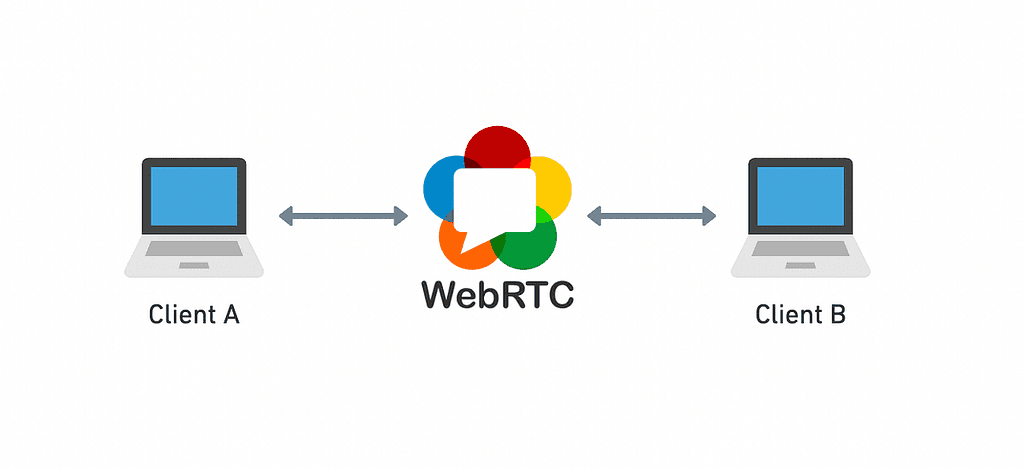
At its heart, WebRTC allows two browsers to establish a direct, peer-to-peer (P2P) connection. Once established, data, audio, and video packets travel directly between users without passing through application servers.
However, the modern internet isn't an open flat network. Firewalls, Network Address Translation (NAT), and dynamic IPs stand in the way.
How Connections Are Established
To establish a connection without a central media relay, WebRTC relies on an initial dance called Signaling:
- Offer and Answer: One peer creates an SDP (Session Description Protocol) offer containing its media capabilities, codecs, and encryption keys.
- STUN (Session Traversal Utilities for NAT): A lightweight STUN server helps each browser discover its public IP address and port behind NAT routers.
- TURN (Traversal Using Relays around NAT): If restrictive symmetric firewalls block direct P2P connections, a TURN relay steps in as a fallback proxy.
- ICE Candidates: Interactive Connectivity Establishment (ICE) gathers and tests candidate pathways, selecting the lowest-latency route.
Lessons from Building Zetra
While developing Zetra, my real-time WebRTC calling platform, I learned that the real engineering challenges in WebRTC aren't about calling createOffer():
- Signaling Reliability: Your WebSocket signaling server must handle edge-case disconnections and reconnection states cleanly.
- Handling ICE Disconnects: Mobile connections frequently switch from Wi-Fi to cellular data, requiring robust ICE restart handlers.
- Media Renegotiation: Adding screen sharing or switching camera tracks on the fly requires synchronized state transitions between both peers.
Direct P2P communication enables astonishingly fast, responsive software — but only when you build reliable infrastructure around network realities.